This Daihatsu control module — labelled Metal Top Roof Control, the ECU responsible for the vehicle's electric retractable hardtop — arrived at our Brisbane workshop completely unresponsive. It wasn't communicating on the network at all, which meant nothing else in the roof system would respond either.
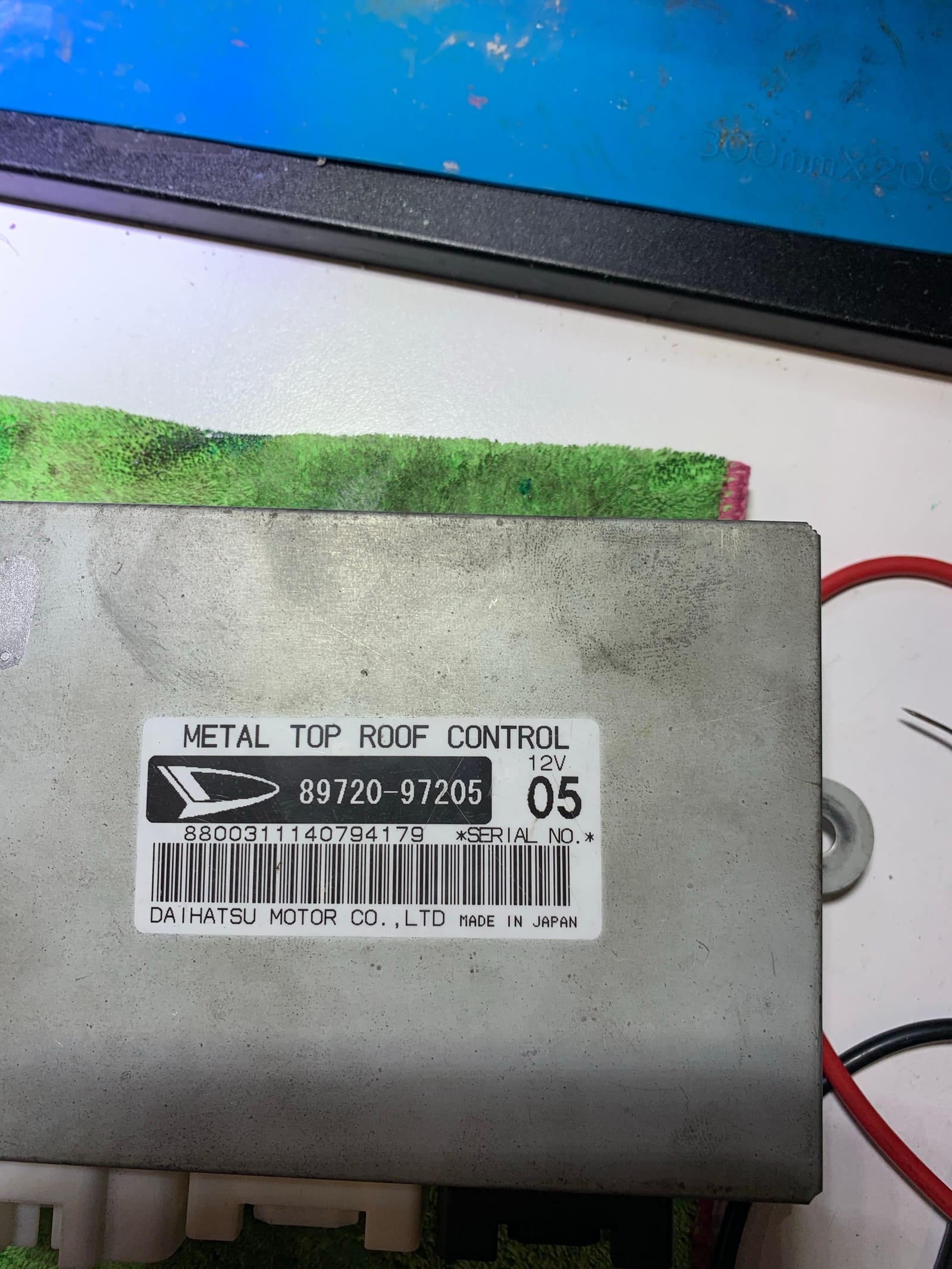
What we found on opening it up
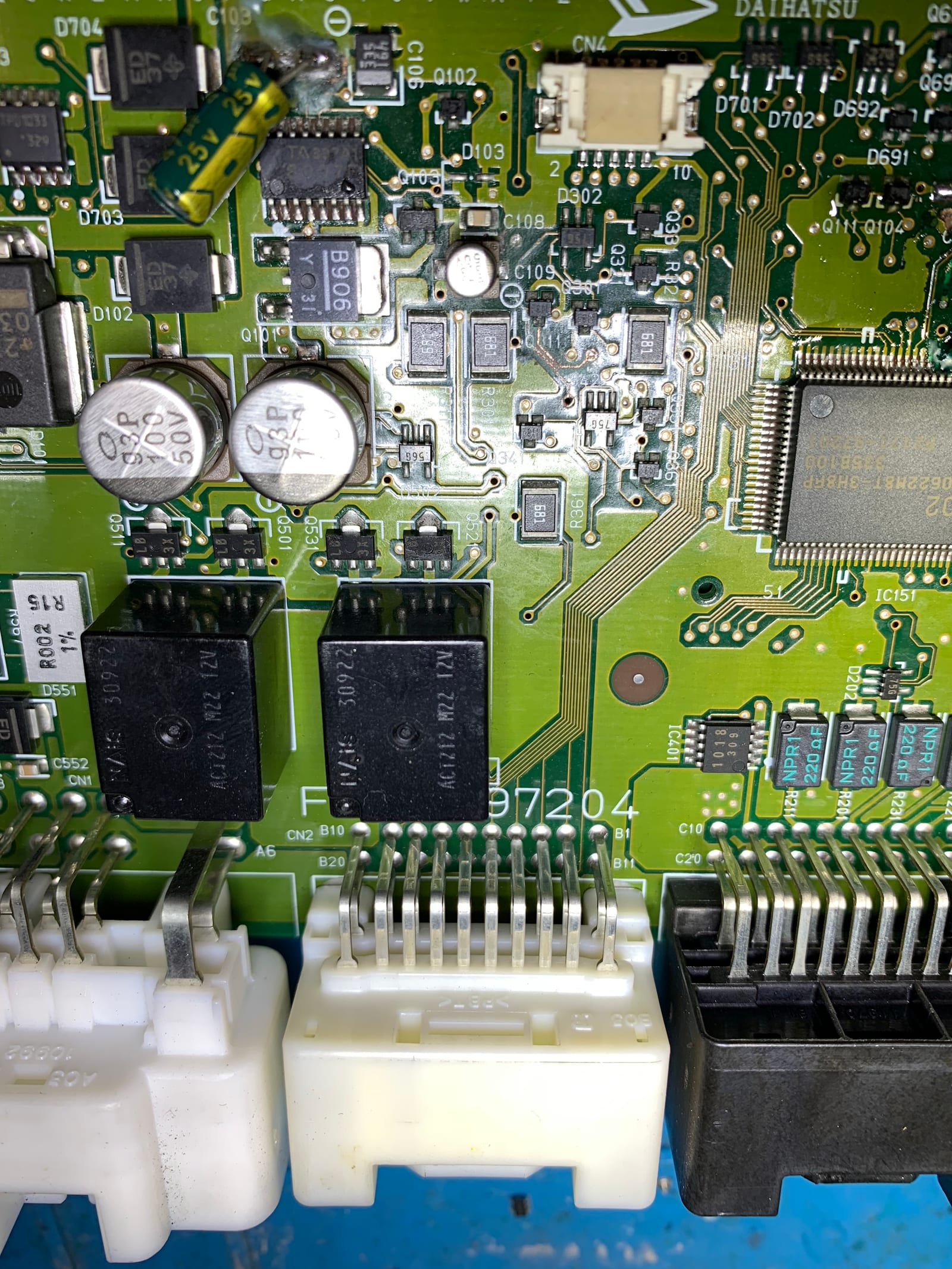
Once the case was off, the cause was obvious: several of the board's aluminium electrolytic capacitors had aged well past their service life and started leaking electrolyte across the board. That leaked electrolyte is mildly acidic, and given enough time it does real damage — in this case it had eaten through a number of the fine copper traces running directly off the legs of the MCU, the chip that does the ECU's actual processing.
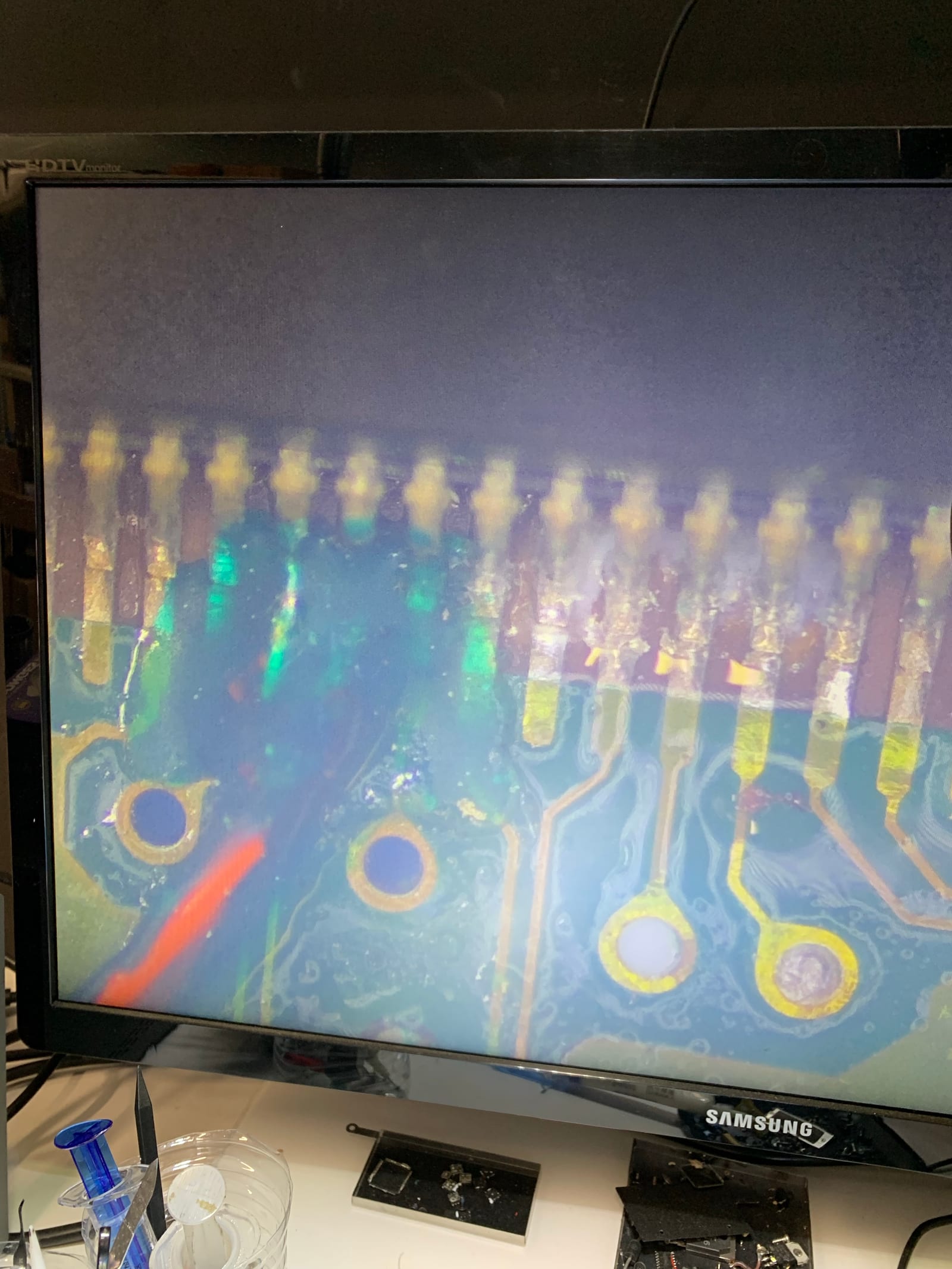
Corrosion damage under the microscope
Under magnification, the extent of it was clear — corroded, broken copper where clean traces should have been, right along the path the leaked electrolyte had tracked across the board. A trace that's been eaten through like this isn't something a re-solder or a cleaning pass fixes; the copper itself is gone, so the electrical path has to be rebuilt from scratch.
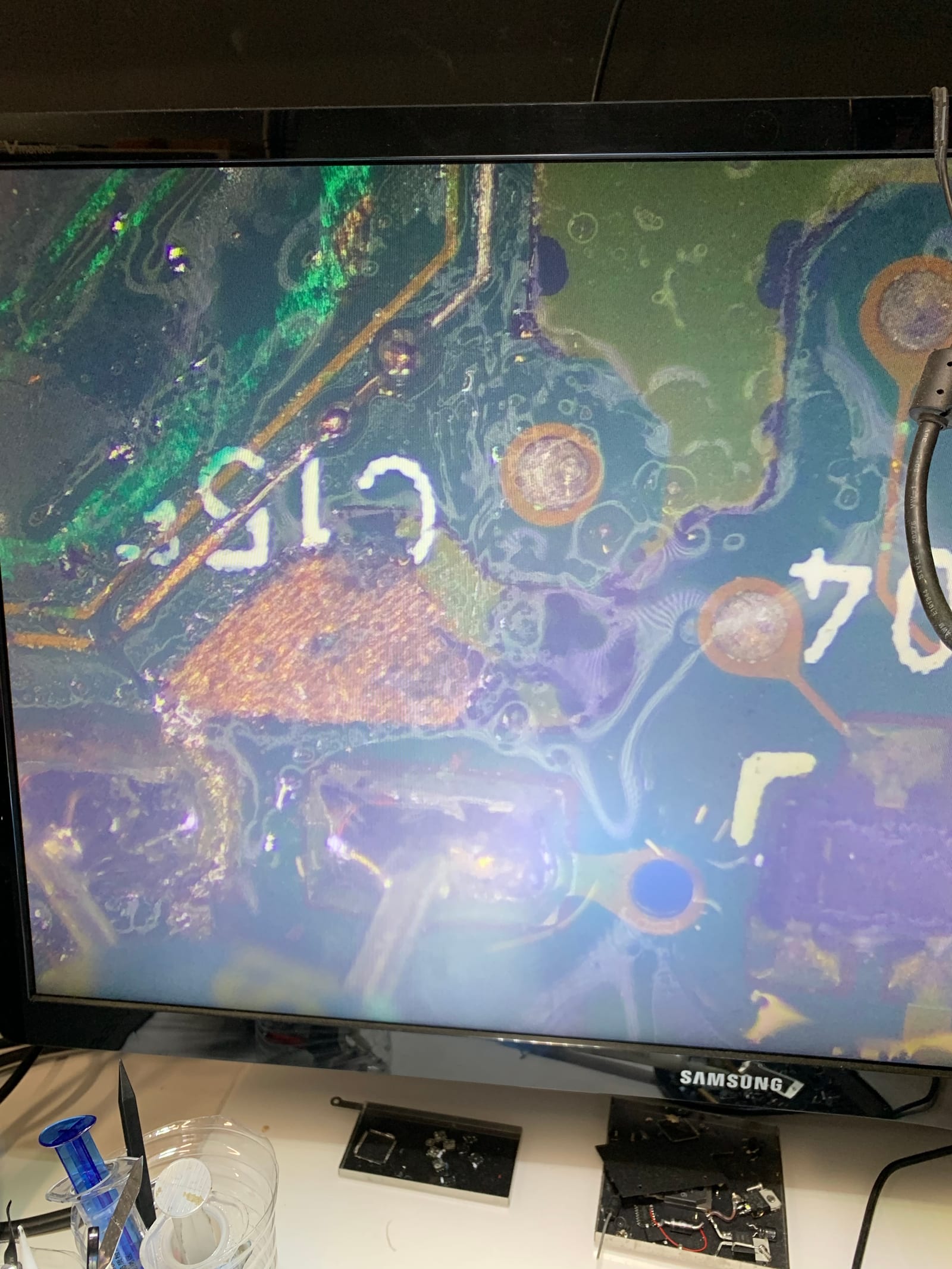
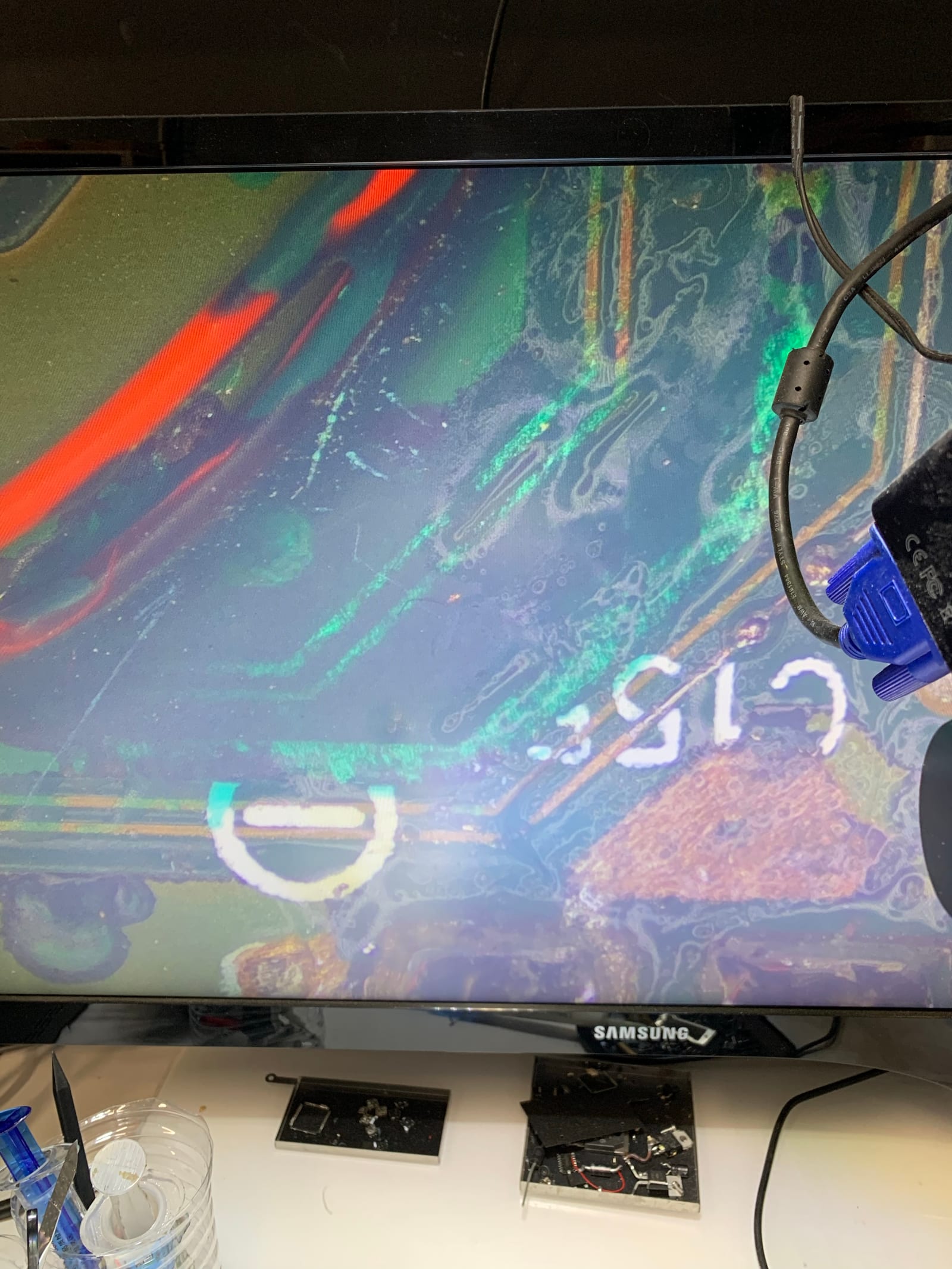
Rebuilding traces too fine for ordinary wire
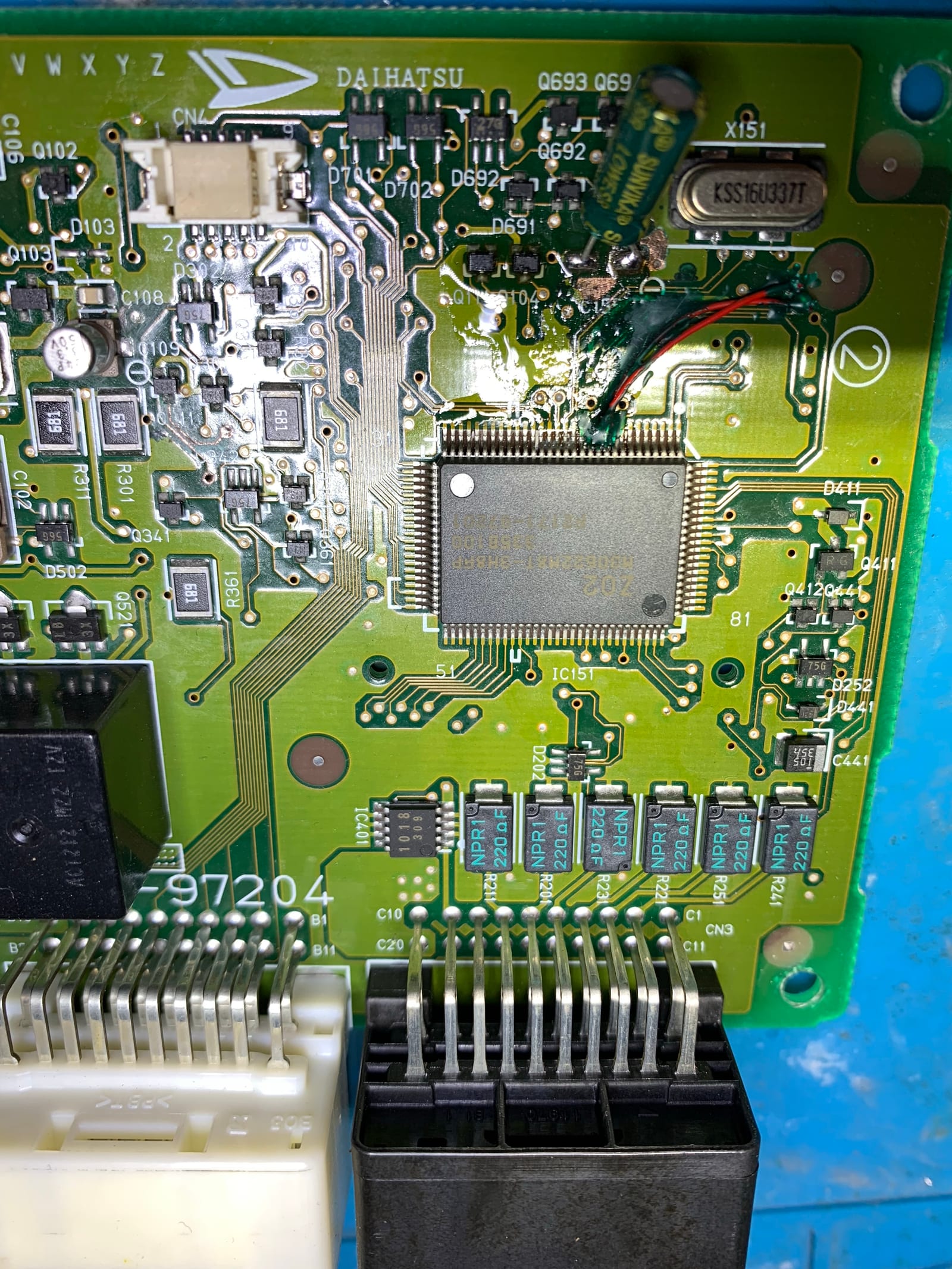
The traces running off this MCU's legs are extremely small — far too fine for standard hook-up wire, which would bridge neighbouring pins and short them together the moment it touched down. Reconnecting them meant hand-soldering ultra-fine wire, one damaged trace at a time, directly onto each affected MCU leg to rebuild the path the corrosion had destroyed. At that scale it's slow, deliberate work with no room for a shaky hand.
Replacing the capacitors and sealing the repair
With the traces reconnected, the aged and leaking aluminium electrolytic capacitors were pulled and replaced, removing the source of the corrosion for good. The last step was coating the rebuilt section in UV-cure conformal coating — a protective resin cured with UV light — over the new wire connections and surrounding traces, sealing them against moisture and any future contamination.
Why leaking capacitors cause this much damage
A leaking capacitor often looks like a simple swap: pull the bulging or crusted one, solder in a new one, done. The catch is that by the time a capacitor is visibly leaking, the electrolyte has usually already been sitting on the board for a while — long enough to track along traces and vias and start corroding the copper underneath. On an ECU packed as tightly as this one, that corrosion can easily reach traces running straight off the main processor, turning what looks like a five-minute capacitor job into a board-level microsoldering repair. Catching leaking capacitors early, before they reach this stage, is the difference between a quick part swap and a rebuild like this one.
Need help with a repair?
CQ Electronics handles component-level electronics repair, board faults, ECU inspection, laptops, consoles, phones and vehicle electrical work in Brisbane.
Request a quote →