Short answer: this Hyundai Tucson was stuck in fail-safe (limp mode), and the scan tool showed no fault codes at all. The cause was on the engine ECU's circuit board: a failed VN5012AK, a high-side power driver chip. We replaced that one chip and the ECU came out of fail-safe. No new ECU, no coding.
Most limp-mode jobs start with a fault code. The code names a sensor or a circuit, and the diagnosis follows from there. This one didn't. The Tucson stayed in fail-safe, the scan tool connected normally, and the fault memory was empty. With nothing to read, the usual parts-and-sensors approach has nowhere to go, and the car ends up with the ECU on our bench.
This is the write-up of what we found, with the manufacturer's data on the part that failed. If your car is doing something similar, our car ECU repair in Brisbane page explains how to get it looked at.
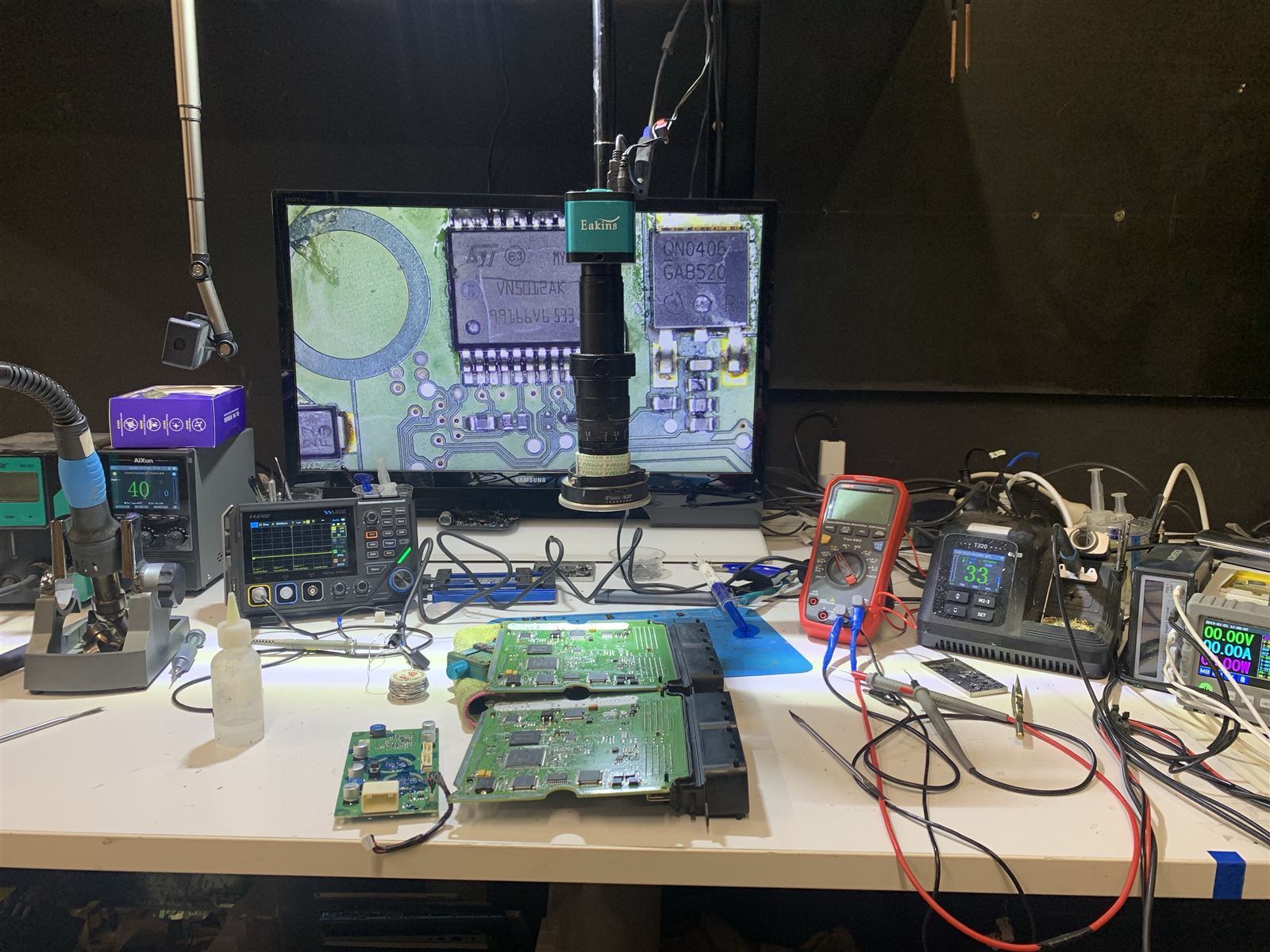
The fault: fail-safe with nothing to read
Fail-safe, often called limp mode, is the ECU protecting the engine and transmission when it decides something can't be trusted. It limits power and holds the car in a reduced state so it can be driven off the road. Normally it also stores a code explaining why.
On this Tucson:
- The car was stuck in fail-safe and stayed there.
- The scan tool communicated with the ECU without trouble.
- No fault codes were stored.
An ECU that talks to the scan tool but reports nothing wrong, while clearly behaving as if something is wrong, points at the ECU itself. So the next step was the circuit board.
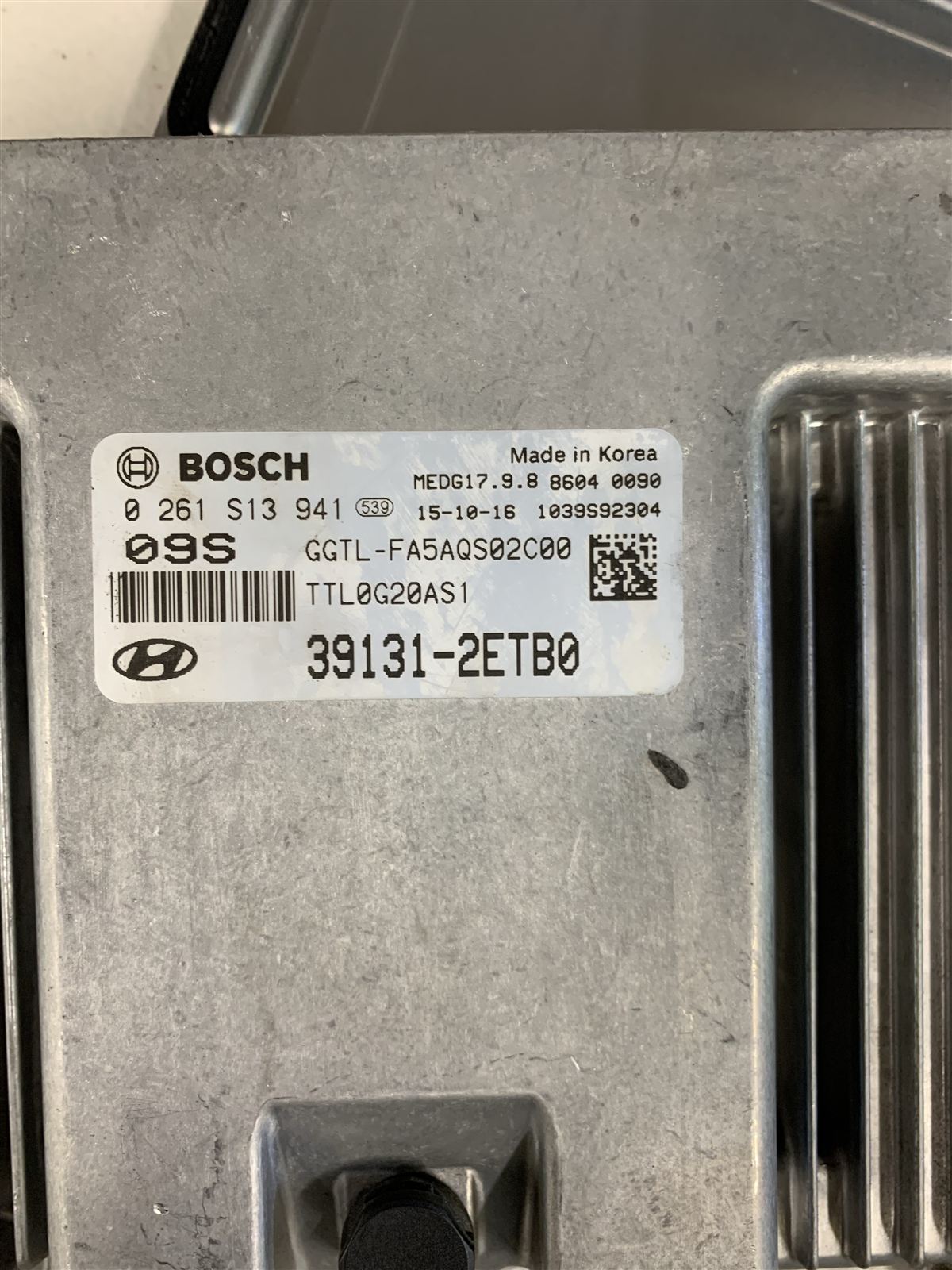
The ECU: Bosch MEDG17.9.8
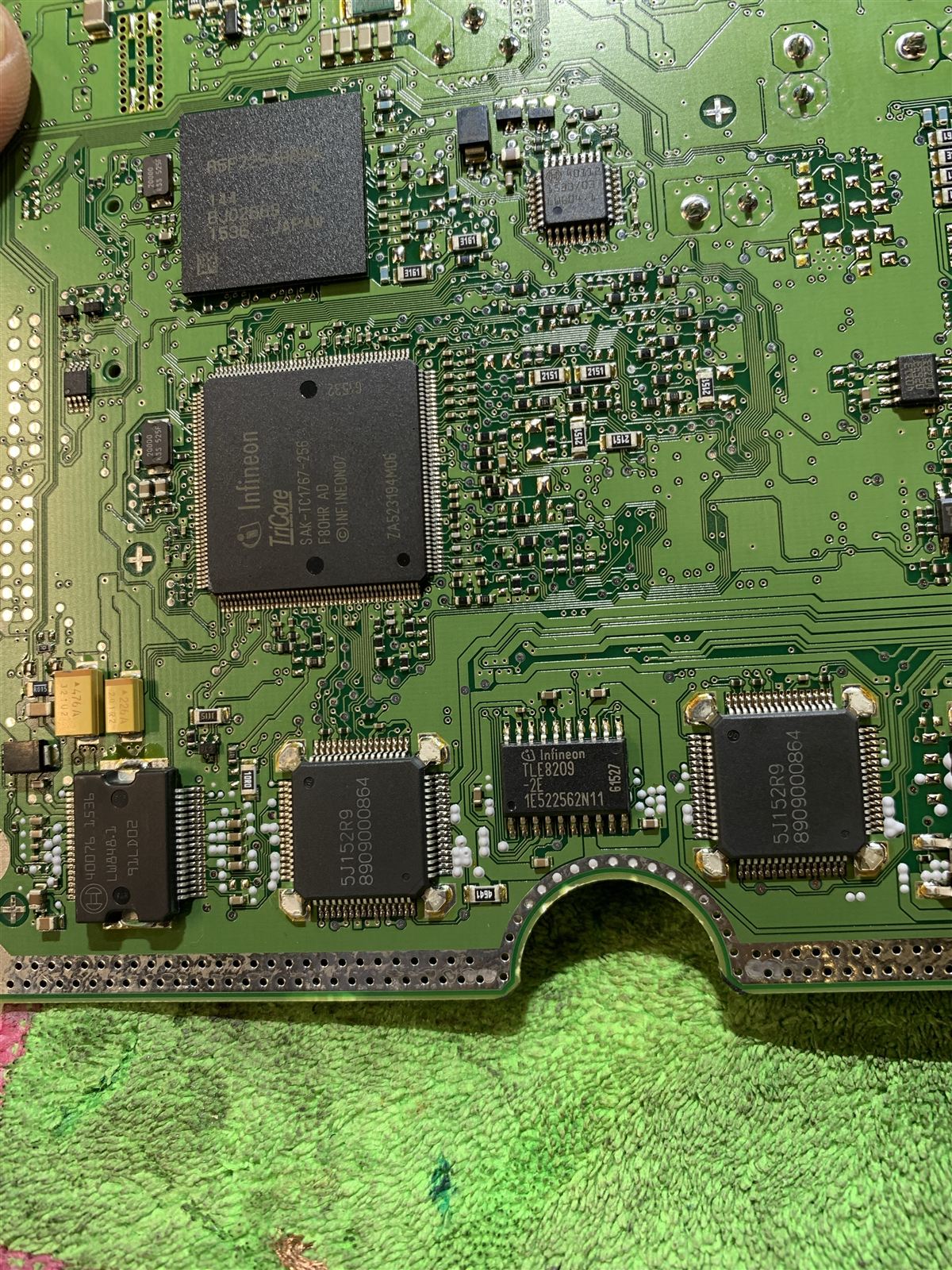
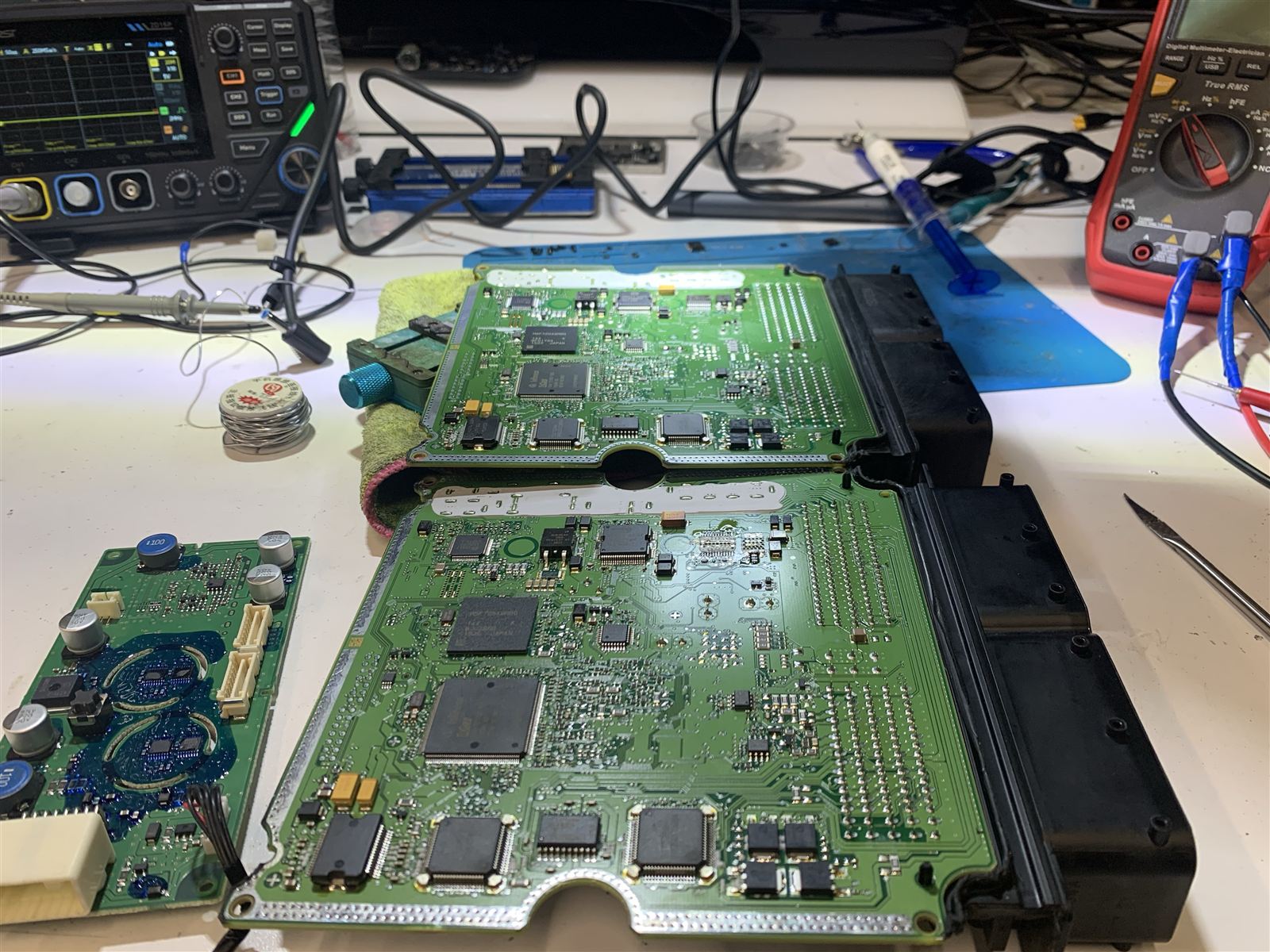
The label identifies the unit as a Bosch MEDG17.9.8, Bosch number 0 261 S13 941, Hyundai part number 39131-2ETB0. It is a single circuit board in a sealed aluminium case, built around an Infineon TriCore processor, with the power-switching parts along the edges where the case can carry their heat away.
Why limp mode can have no fault codes
A fault code is not a measurement. It is the ECU's software deciding that a reading is outside the range it was told to expect, for long enough, under the right conditions. That works well for a sensor that has gone open circuit or an actuator that draws too much current.
It works less well when the fault is inside the ECU. The ECU is checking its own circuits with its own circuits. If a part fails in a way the software was never written to recognise, the ECU can lose something it depends on, drop into fail-safe to protect the engine, and still have no code that describes what happened. The scan tool can only show what the ECU has stored, so it shows nothing.
That is the gap this fault fell into, and the reason it needed bench testing with proper equipment instead of more scanning. We cover that difference in oscilloscope vs multimeter: why real test equipment matters.
What the VN5012AK does
The failed part was a VN5012AK, made by STMicroelectronics. ST describes it as a single-channel high-side driver with analog current sense for automotive applications. In plain terms, it is an electronic switch that sits between the battery supply and a load, turns that load on and off when the processor tells it to, and protects itself while doing it.
"High side" describes where the switch sits. The load stays permanently connected to ground, and the switch connects or disconnects the positive supply above it.
The numbers below are from ST's datasheet for the VN5012AK-E (document 13240, revision 9).
| Characteristic | Datasheet value | What it means |
|---|---|---|
| Package | PowerSSO-24 | 24 fine-pitch legs plus a metal pad underneath that is soldered to the board to carry heat away |
| Operating supply voltage | 4.5 V to 36 V | Built for a car's 12 V system, including the dips and spikes that come with it |
| On-state resistance | 12 milliohms maximum at 25 °C, 24 milliohms at 150 °C | Very little voltage is lost across the switch, so it can carry a heavy load without much heat |
| Short-circuit current limit | 65 A typical at 13 V | If the output is shorted, the chip limits the current instead of letting the wiring burn |
| Thermal shutdown | 175 °C typical | If it overheats, it switches itself off, then recovers when it cools |
| Undervoltage shutdown | 3.5 V typical | It turns off when the supply is too low to operate properly |
| Current sense ratio | About 4480 to 1 at 5 A | The sense pin outputs a small copy of the load current for the processor to measure |
The chip has six kinds of pin: the battery supply (VCC), the power output, ground, the on/off input from the processor, the current sense output, and a pin that lets the processor switch the current sense off (CS_DIS). Inside, the datasheet's block diagram shows the logic, undervoltage and overtemperature detection, current limiting, power limiting and a voltage clamp, all wrapped around one large power transistor.
How the chip reports a fault
This is the part that explains the empty fault memory. The VN5012AK has no fault code of its own and no data link to the processor. Everything the ECU can learn about that circuit comes through one analog pin: current sense.
In normal operation the pin delivers a current proportional to the load current. With a 5 A load and a ratio of about 4480 to 1, that is roughly 1.1 mA. The ECU passes that current through a resistor and measures the voltage. The datasheet's truth table then describes what the pin does in each condition:
| Condition | Output | Current sense pin |
|---|---|---|
| Normal, switched on | On | A current proportional to the load |
| Switched off | Off | Zero |
| Overtemperature | Off | Forced to a fixed high level as a flag |
| Undervoltage | Off | Zero |
| Output shorted to ground | Off | Zero, until the chip overheats, then the high flag |
| Output shorted to battery | High | Lower than it should be |
Notice how often the answer is "zero". Zero is what the pin reads when the output is off on purpose, when the supply is low, and in the first moments of a short. Whether any of these becomes a stored code depends entirely on how the ECU's software interprets the reading and when it chooses to look.
So a high-side driver that has failed internally can leave the ECU without a supply it expects, which is enough to hold it in fail-safe, without ever producing a reading that the software maps to a specific code. That is consistent with what this Tucson did: clearly in fail-safe, and nothing in the fault memory.
The repair
On this board the VN5012AK sits near the edge, beside a power MOSFET and under the grey thermal compound that couples that area of the board to the case.
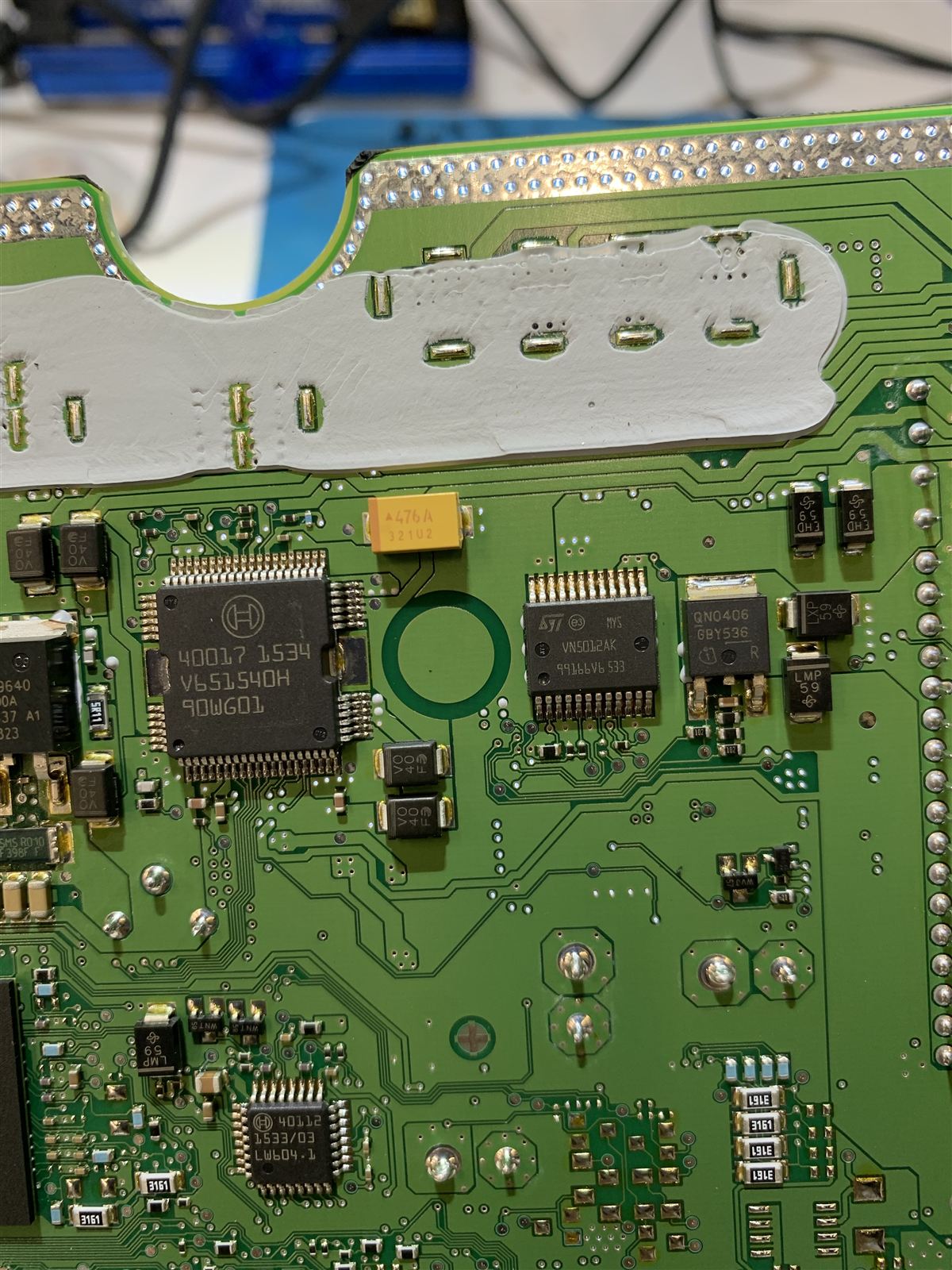
The PowerSSO-24 package is not removed with a soldering iron alone. The metal pad underneath is soldered to a large copper area that is designed to pull heat away, so the board has to be warmed and the part lifted with controlled hot air, without disturbing the small components packed around it. With the chip off, the pads are cleaned back to bare, flat copper so the replacement sits level and every one of the 24 legs solders properly.
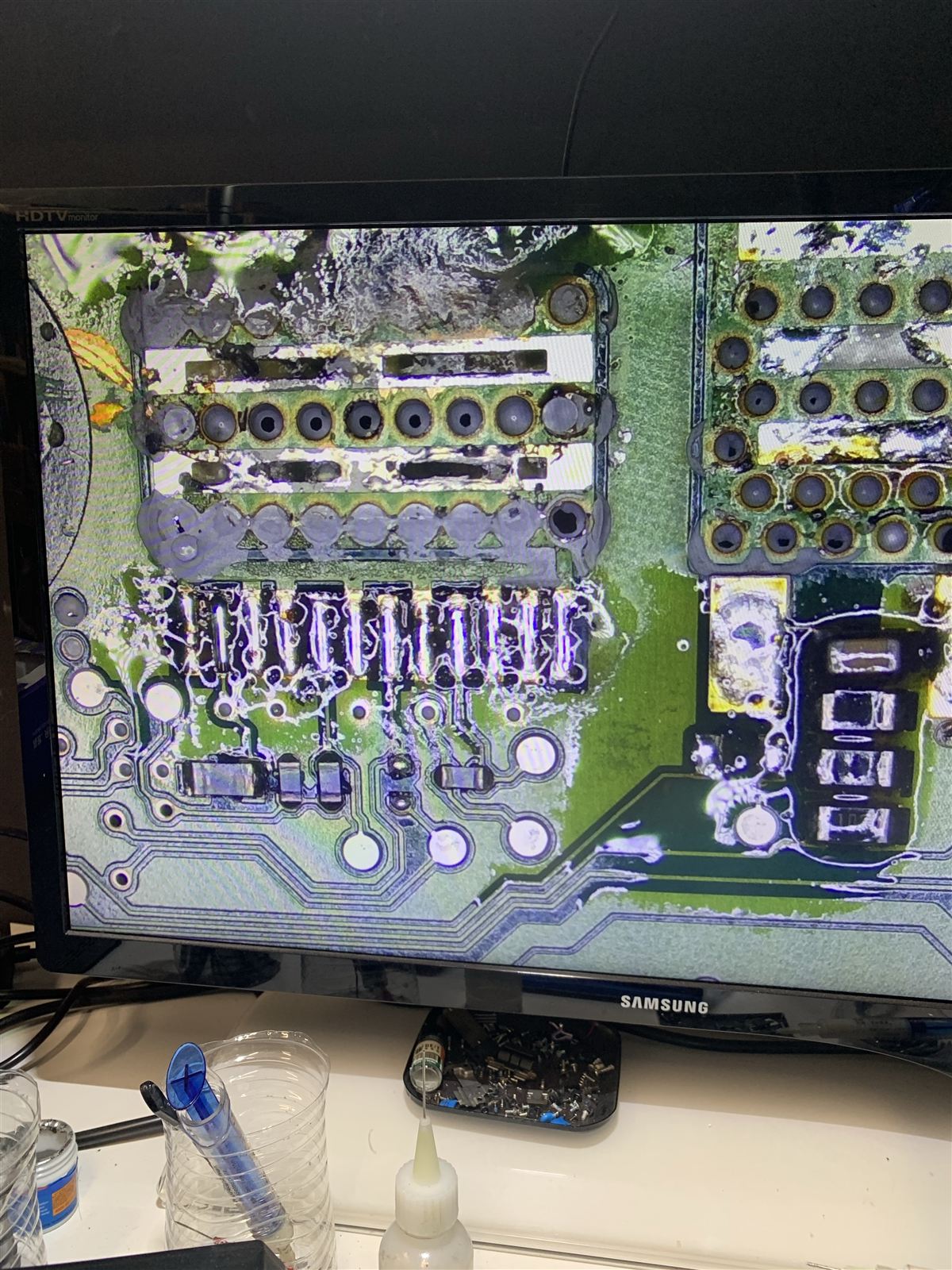
A replacement VN5012AK went on, the joints were checked under the microscope, and the ECU was tested. It came out of fail-safe. Because this is the car's original ECU, it kept its own software and vehicle data, so there was no replacement unit to code.
What this means if your car does the same
One failed chip is not the only reason a car sits in limp mode, and most limp-mode faults are still sensors, wiring or actuators. But the ECU moves up the list when:
- The car is in fail-safe and the scan tool shows no codes, or only codes that don't match the symptoms.
- Parts have already been replaced and nothing changed.
- The fault appeared after a jump start, a flat battery, water getting in, or other electrical work.
- A workshop has told you the ECU needs replacing.
A replacement ECU usually has to be matched to the car, which adds cost on top of the part. Repairing the original avoids that when the fault is a component that can be replaced, as it was here. To get a quote, send us the make, model and year, the numbers from the ECU label, the symptoms, and any codes or diagnosis you have been given.
5% off every repair, or a 5% price beat
No competitor quote needed for the discount: every ECU repair booked with CQ Electronics in Brisbane comes with an automatic 5% off the quoted price. And if you find a genuine lower price for the same repair elsewhere, we will beat it by 5%. The price beat can't be combined with the 5% off, so you get one or the other.
Frequently asked questions
Why is my Hyundai Tucson in limp mode with no fault codes?
Limp mode with an empty fault memory usually means the ECU has lost something it depends on in a way its software was not written to describe. Sensors and wiring should still be checked first, but when the scan tool connects normally and shows nothing, the ECU itself becomes a likely cause. On the Tucson in this article it was a failed VN5012AK driver chip on the ECU board.
What is fail-safe or limp mode?
It is a protective state. When the ECU decides a signal or circuit cannot be trusted, it limits engine power and holds the car in a reduced mode so it can be driven off the road without causing damage. It normally stores a fault code explaining why, but not always.
What does the VN5012AK do in an ECU?
The VN5012AK is a high-side driver made by STMicroelectronics. It is an electronic switch between the battery supply and a load: the processor turns it on and off, and the chip limits current, shuts down if it overheats, and reports the load current back through an analog current sense pin.
Can a Bosch MEDG17.9.8 ECU be repaired instead of replaced?
Often, yes, when the fault is a component on the board that can be identified and replaced. In this case one driver chip had failed and replacing it brought the ECU out of fail-safe. Not every ECU fault is repairable, so we diagnose first and confirm before any major work.
Does a repaired ECU need coding or programming?
Normally not. A repaired ECU is still your car's original unit, so it keeps its own software and vehicle data and goes back into the same car. A replacement ECU usually has to be matched to the vehicle.
Is it safe to keep driving in limp mode?
Limp mode is meant to get you off the road and to a workshop, not for everyday driving. Power is limited, and the fault behind it can get worse. Have it diagnosed before relying on the car.
How much does ECU repair cost in Brisbane?
It depends on the fault and the ECU. We diagnose first and quote before any major work. Every repair booked with CQ Electronics includes 5% off the quoted price. If you find a genuine lower price for the same repair elsewhere, we will beat it by 5%. The price beat can't be combined with the 5% off.
Do you repair ECUs for other makes and models?
Send us the make, model and year, the numbers on the ECU label and the symptoms when you request a quote. We will confirm whether we can take it on and what the next step involves before you bring it in.
Will you beat a cheaper quote from another Brisbane repairer?
Yes. Every repair already includes 5% off the quoted price, and if you find a genuine lower price for the same repair elsewhere, we will beat it by 5%. The price beat can't be combined with the 5% off, so you get one or the other. Tell us about the other price when you request a quote.
Car stuck in limp mode with no fault codes?
Send us the make, model, year and the numbers on the ECU label. CQ Electronics repairs vehicle ECUs at component level from our workshop in Seventeen Mile Rocks, Brisbane, with 5% off every repair, or a 5% price beat on any genuine lower price (not combined).
Request a quote →Related repair guides
- Car ECU and module repair in Brisbane: no-communication faults, power and ground diagnosis, corrosion damage
- ECU repair: no communication from capacitor corrosion: another module repaired at board level
- Airbag module reset in Brisbane: crash data reset for all car makes
- Oscilloscope vs multimeter: why proper test equipment matters